A complete redesign of OpenBlend's most critical feature — used for 700,000+ conversations a year — to transform transactional 1:1s into a genuine performance tool.
Since its 2014 launch, OpenBlend has rapidly gained prominence in the UK's performance management and HR space, facilitating over 700,000 1:1 conversations annually by 2023. The 1:1 tool, launched in 2018, was the company's most-used and most critical feature — and the primary reason customers signed up.
But it was struggling to gain traction. Managers and employees weren't using it the way it was designed, causing customer churn and becoming the company's main focus for retention. I was the sole designer on this project from December 2023 to July 2024, working closely with a Product Manager — handling research, design, prototyping, and usability testing end-to-end.
At the start, we only had feedback from the customer experience team. I partnered with the Product Manager to go deeper, speaking to 50 customers — Talents, Managers, and Admins — from various companies.
Five clear patterns emerged from those conversations:
"My manager can't see the agenda I created. I can't create a recurring booking. I am creating notes outside of the OpenBlend system."
I used Mixpanel to analyse event data on the current experience, measuring drop-off rates at key points. The data confirmed what users were telling us: most users don't add an agenda before starting a 1:1, book fewer regular meetings than expected, cover only about 45% of agenda topics during discussions, and rarely take notes.
Before a single screen was designed, I needed to understand users' pain points and where the business was heading. Four questions shaped the strategy:
With those questions answered, I reframed the problem around three design challenges:
From there, three design principles lit the path forward.
* Actual metric values omitted for confidentiality
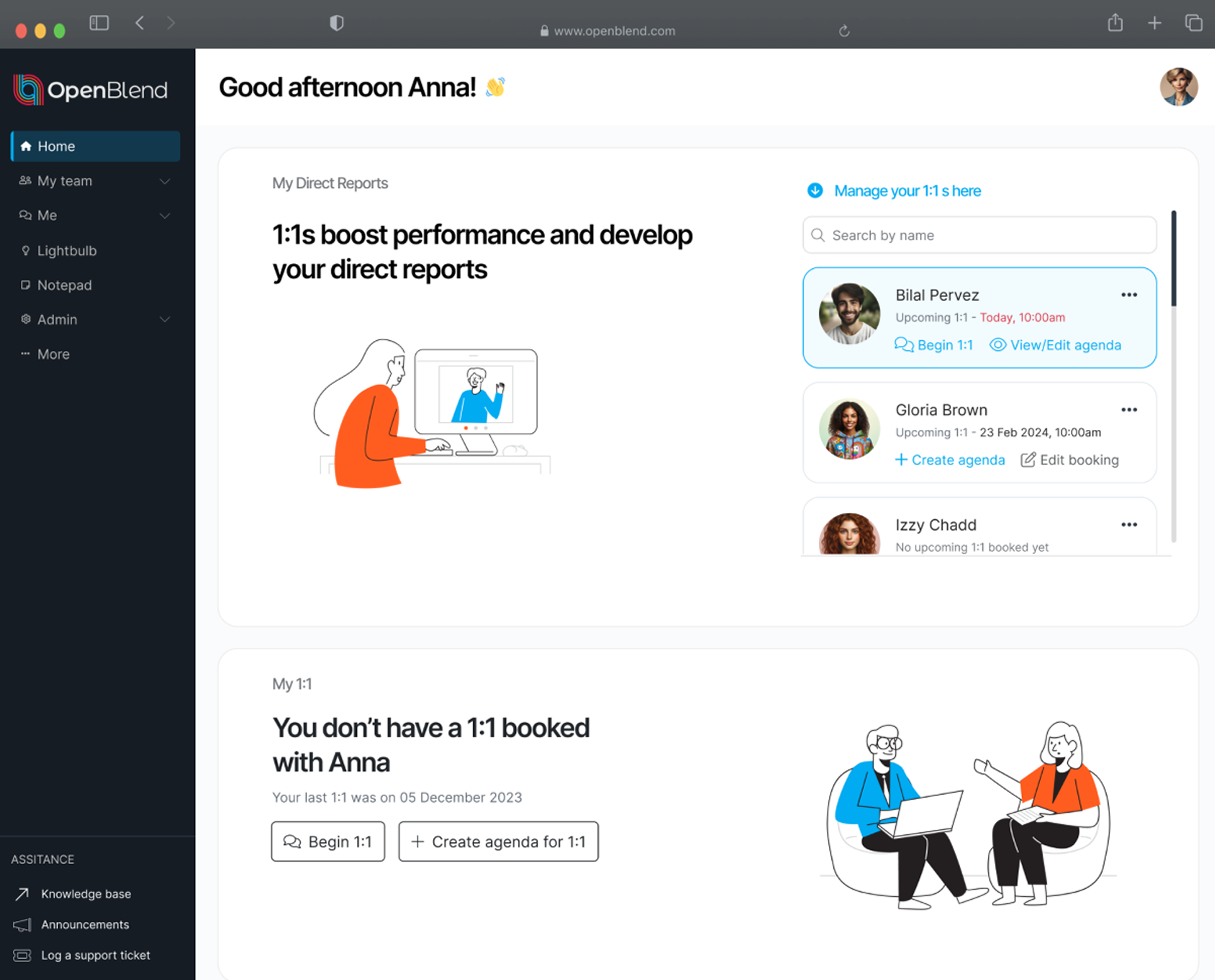
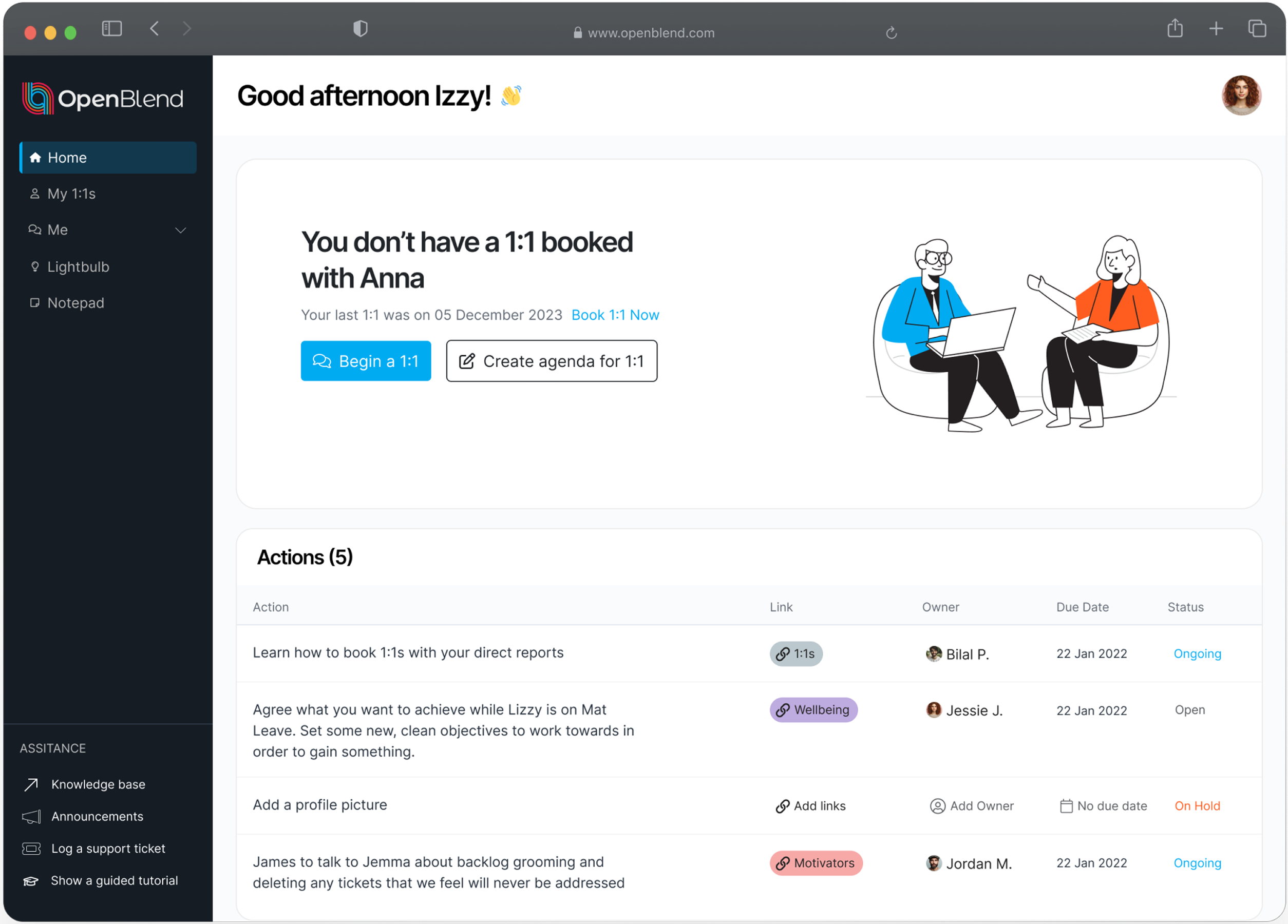
Consolidated snapshots, tasks, manager's 1:1s, and booking actions into a single homepage. Managers can now book a 1:1, start an ad hoc meeting, create an agenda, and view talent snapshots without navigating away.
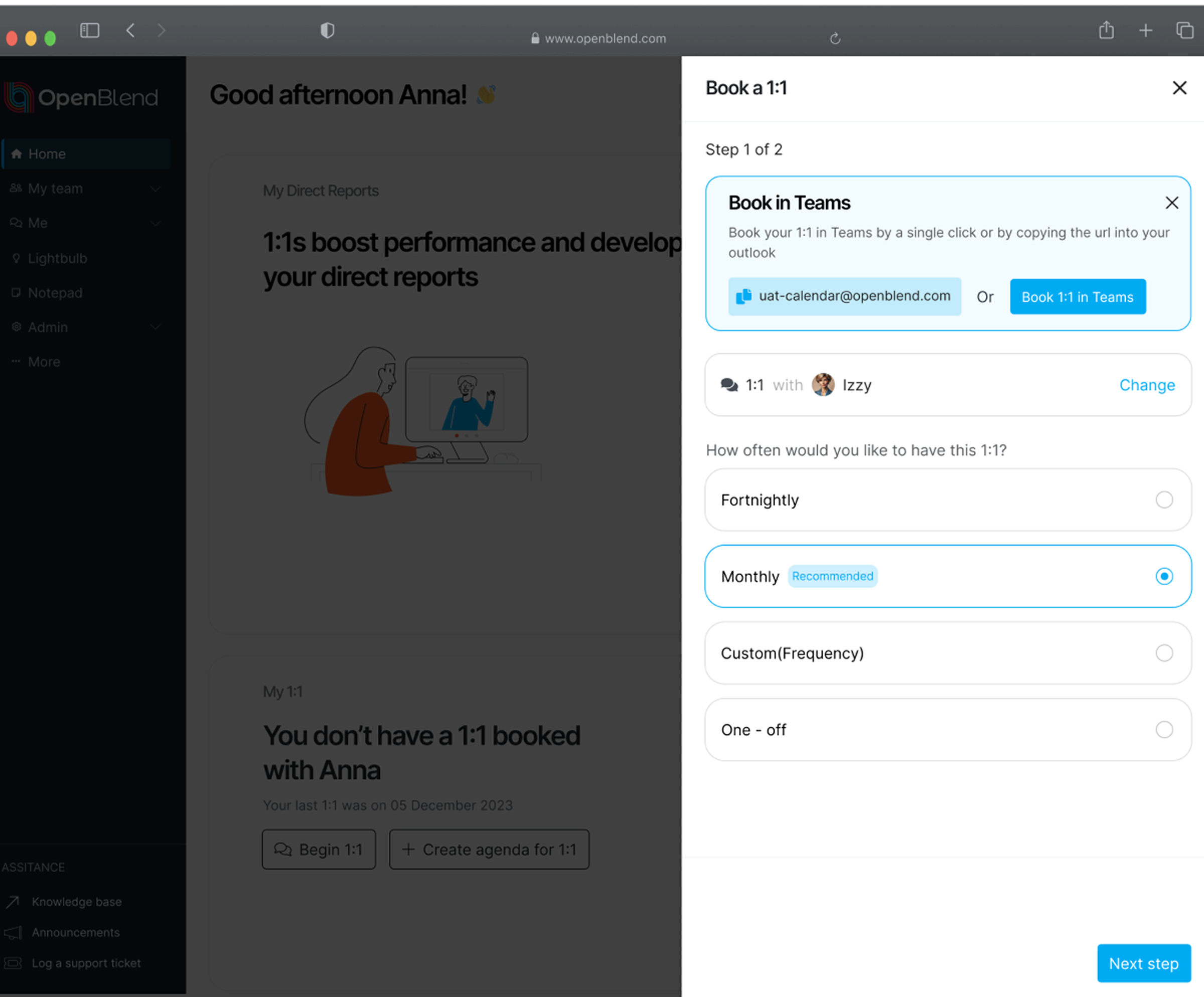
The new booking flow lets users specify frequency, start and end dates, and ownership of recurring 1:1s — replacing a rigid, single-booking system that actively discouraged regular meetings.
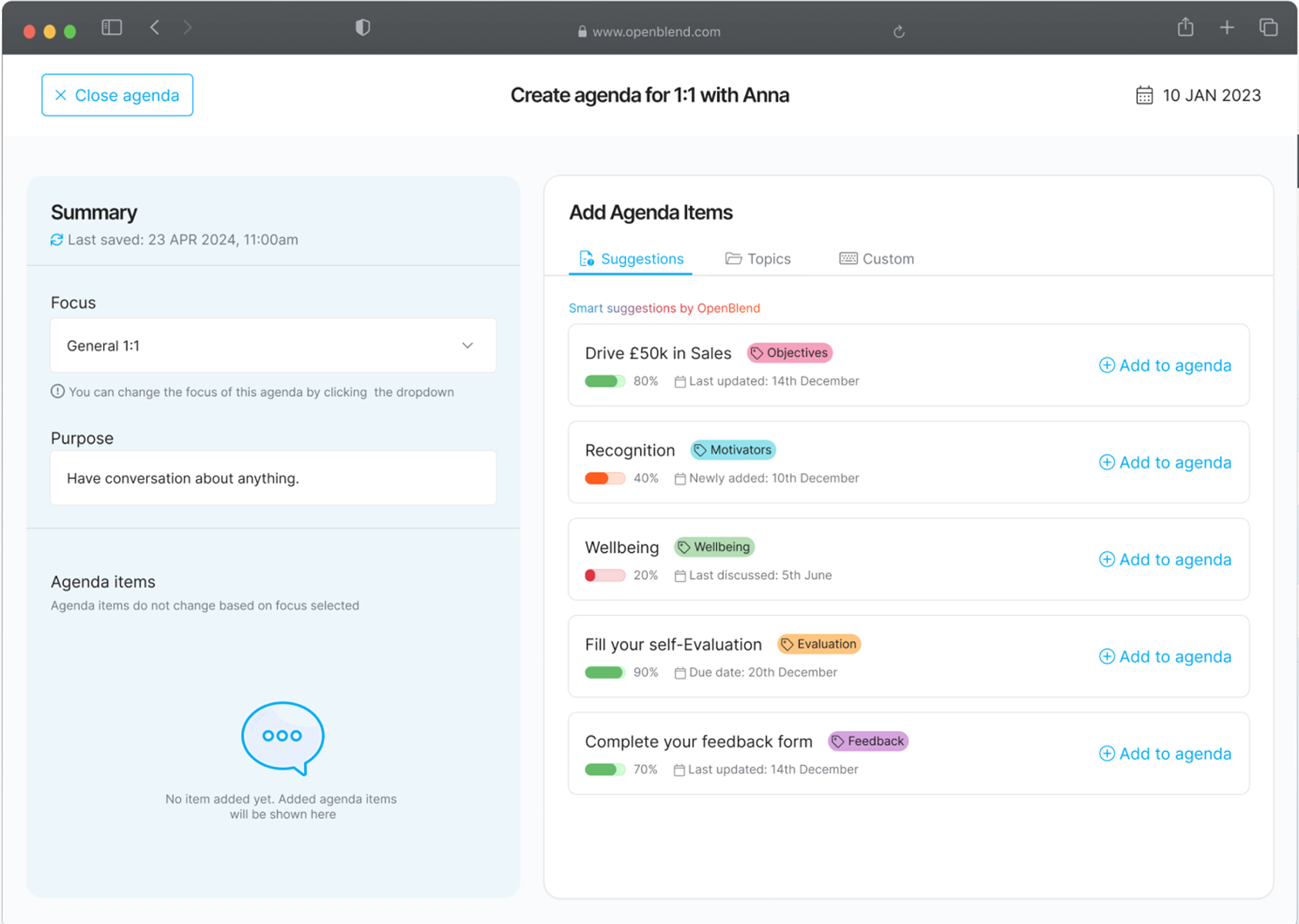
A full-screen agenda preparation experience with AI-assisted smart suggestions based on interaction data. Both talent and manager see the same agenda and can edit it at any time — no more entering meetings blind.
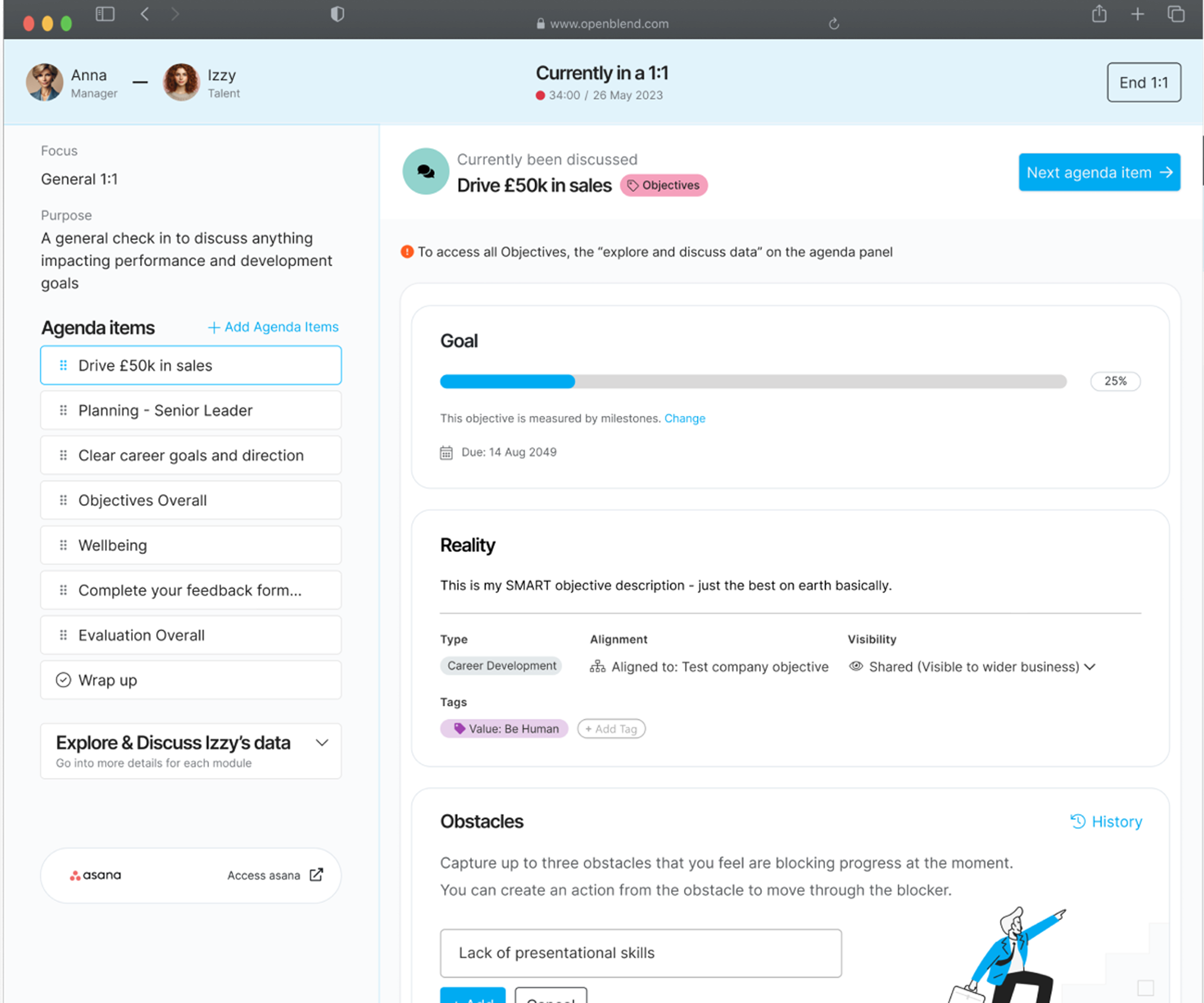
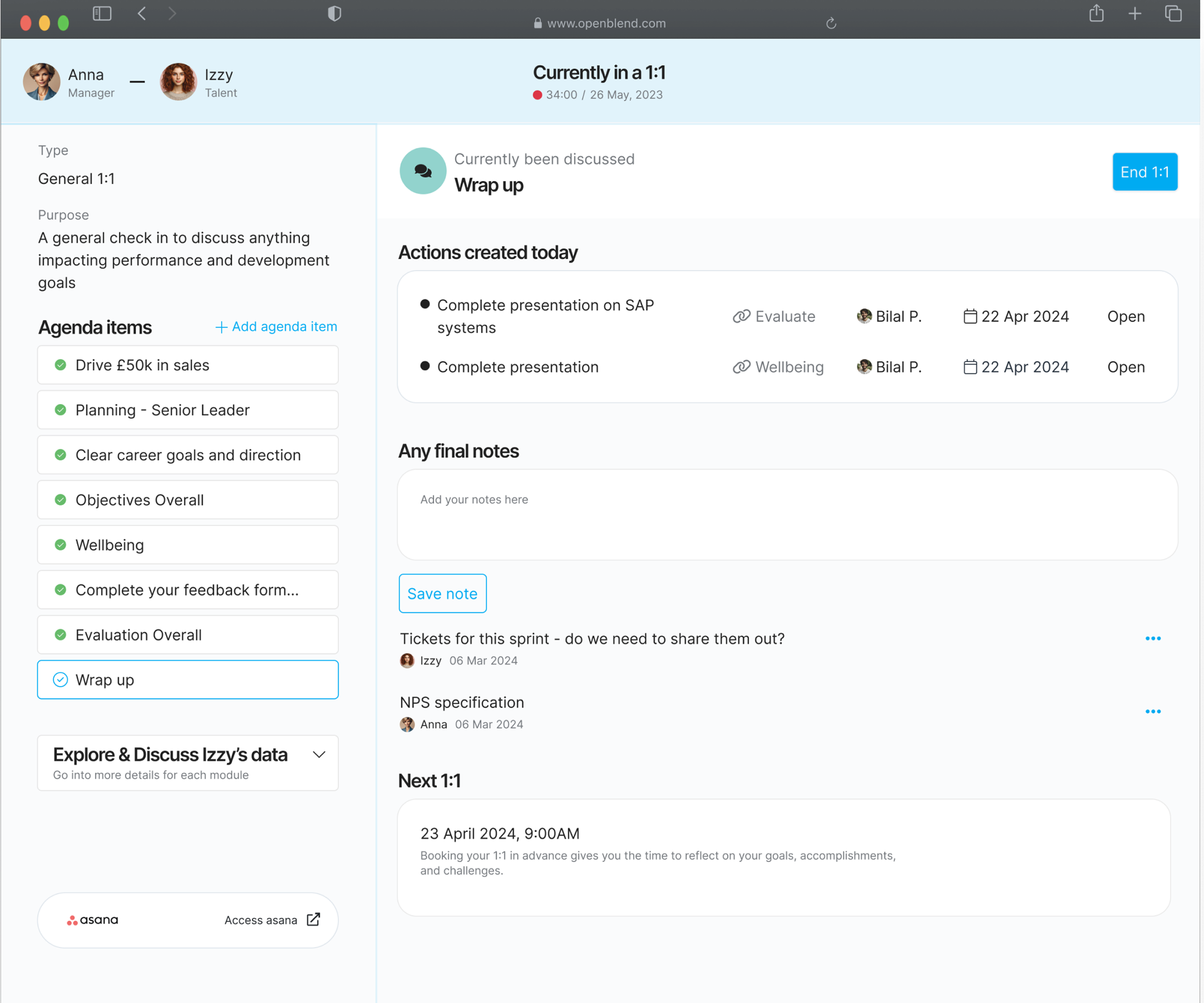
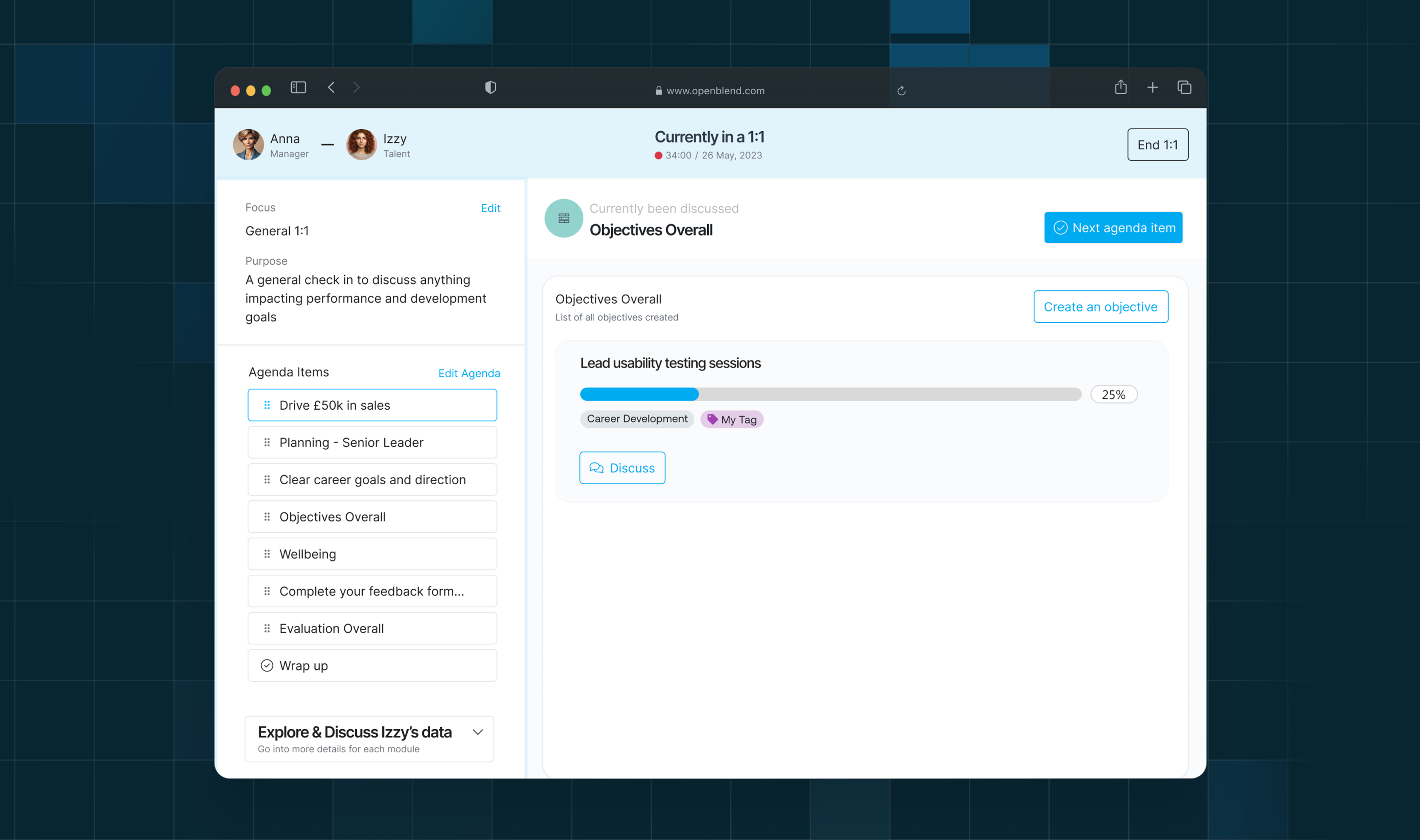
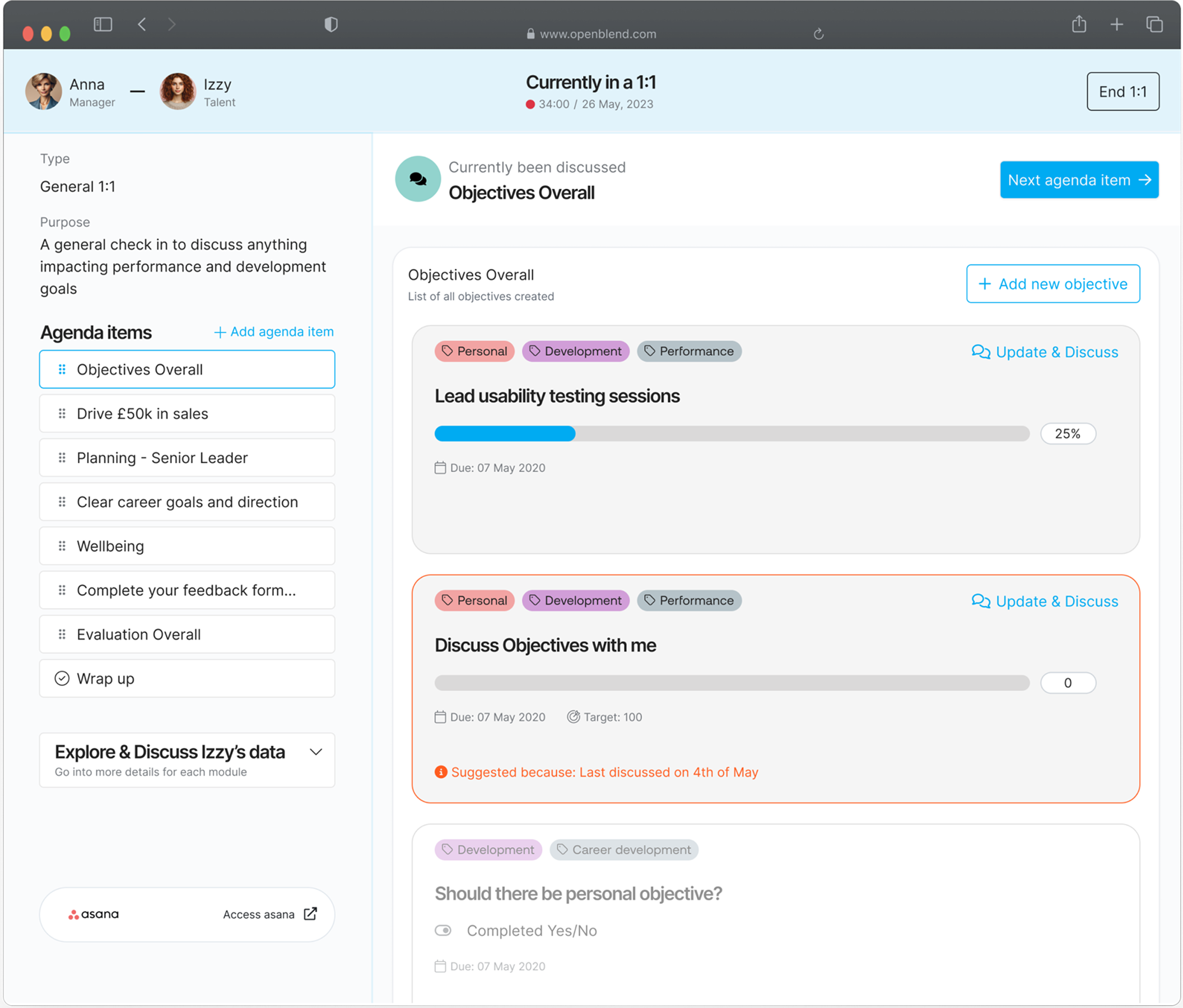
A split-screen 1:1 experience: agenda panel on the left, discussion panel on the right with embedded user data. The GROW model (Goal, Reality, Obstacles, Way Forward) structures each agenda item, with notes embedded directly into Way Forward.
A summary page at the end of every 1:1 showing all notes taken, action items created, and the date of the next session — turning each meeting into a documented record with continuity.
Developed in collaboration with a leadership coach, the GROW model structures each 1:1 agenda item to move conversations from intent to action.
What does the talent want to achieve? Setting intent before the conversation begins.
Where are they now? An honest assessment of current progress and context.
What's in the way? Surfacing blockers that prevent progress toward the goal.
What are the next steps? Where notes and action points are embedded and captured.
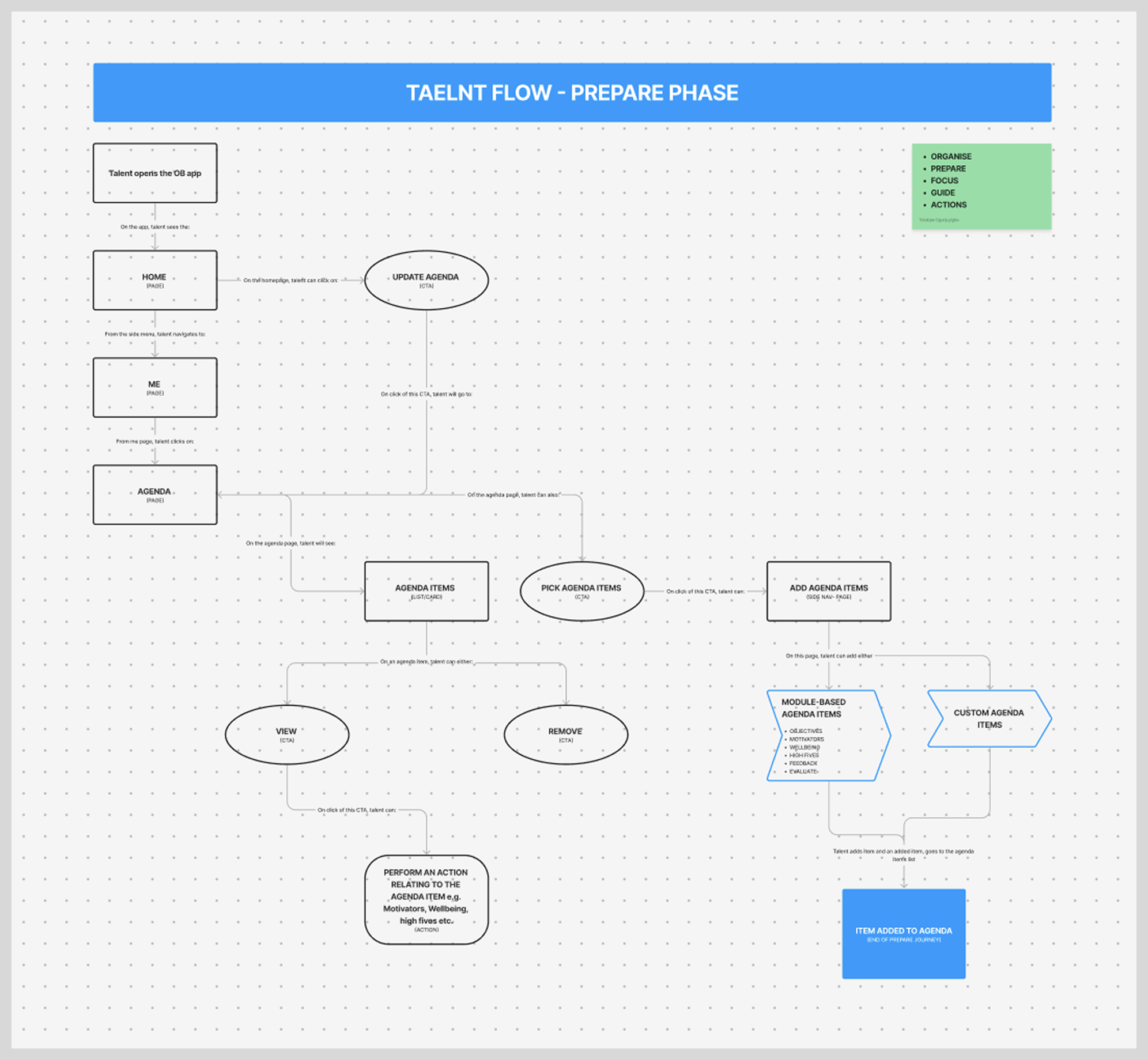
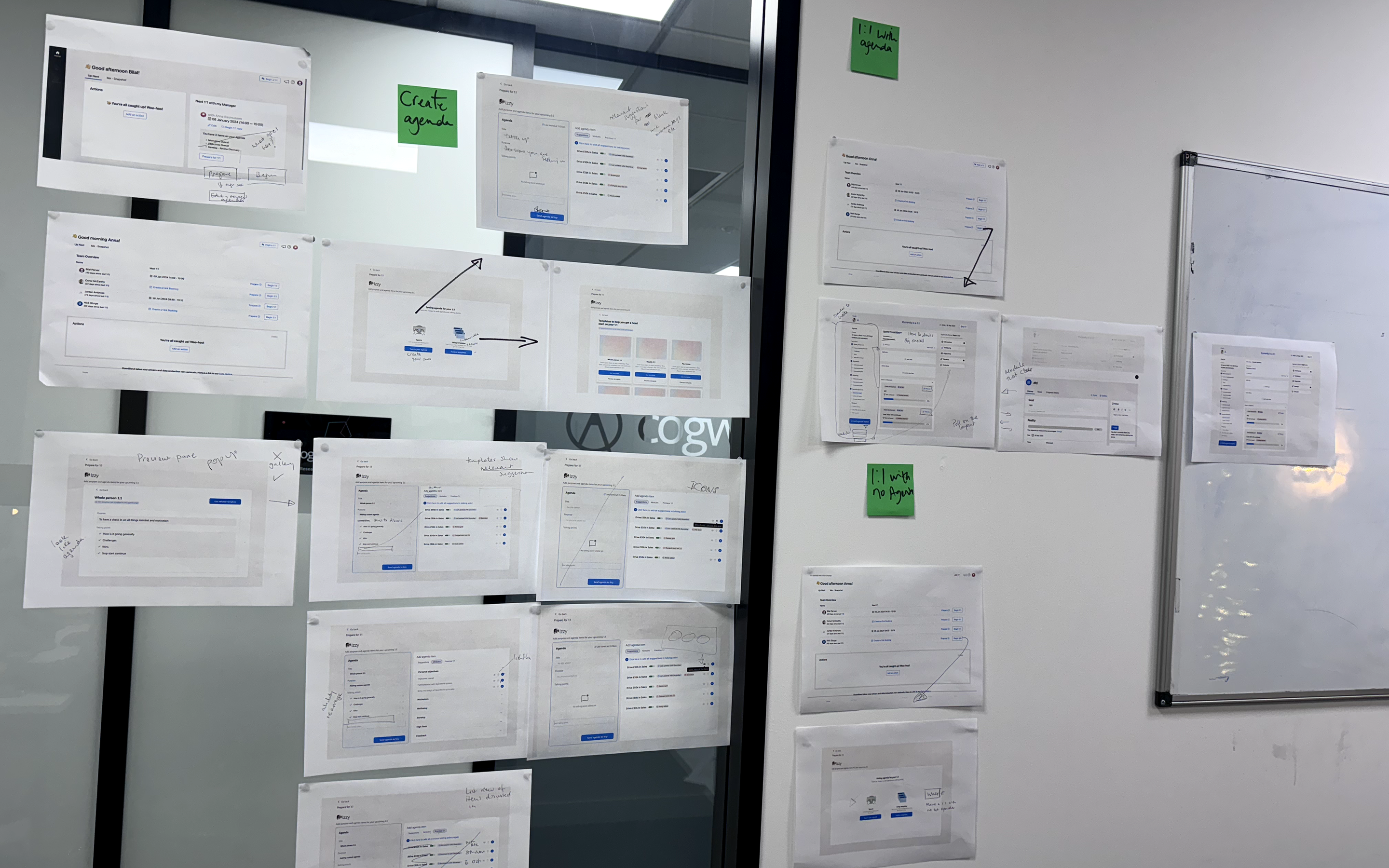
To reach the final design, I ran internal tests with company staff and external sessions with customers — managers, talents, and admins. Each round shaped what got refined next.
The most useful signal from testers:
The new experience launched globally on October 14, 2024 — the most significant change to the product since the company was founded. After eight months of research, iteration, testing, and refinement, it was one of my proudest achievements.
Post-launch, I collaborated with the Marketing and Customer Success teams to build the materials needed to communicate and sell the value of the redesign to customers. The rollout was phased, and the early feedback was overwhelmingly positive.
It is one of my proudest achievements — a complete redesign of the tool's most important feature, built to last.
Some of the messages that came in from colleagues and customers:
I've just completed my first demo with the new UX to 1800 people. I feel quite emotional. Finally the demo matches our pitch. It was amazing. Really it was. I couldn't be prouder of our product right now. Its bloody brilliant.
Thank you so much to every one of you for all your hard work.
Just had a chat with Helen at Breedon. She absolutely LOVES the new update. Her support on this is massive and integral to its success.
Just wanted to give a shout out to everyone involved! Great job guys 🙂
You got a big round of applause from the whole team for your make 1:1s easy designs — big well done.
New Agenda design looks brilliant!
Very clever solution to the type/template problem we were facing. Good job!
The biggest UX wins aren't always about adding features, they're about removing the decision points that make people give up. The blank agenda was the real enemy.